Theo Lange · 21 November 2026
Seasonal Event Cycles Driving Unexpected Collaborations Across Riverguild's Member Base
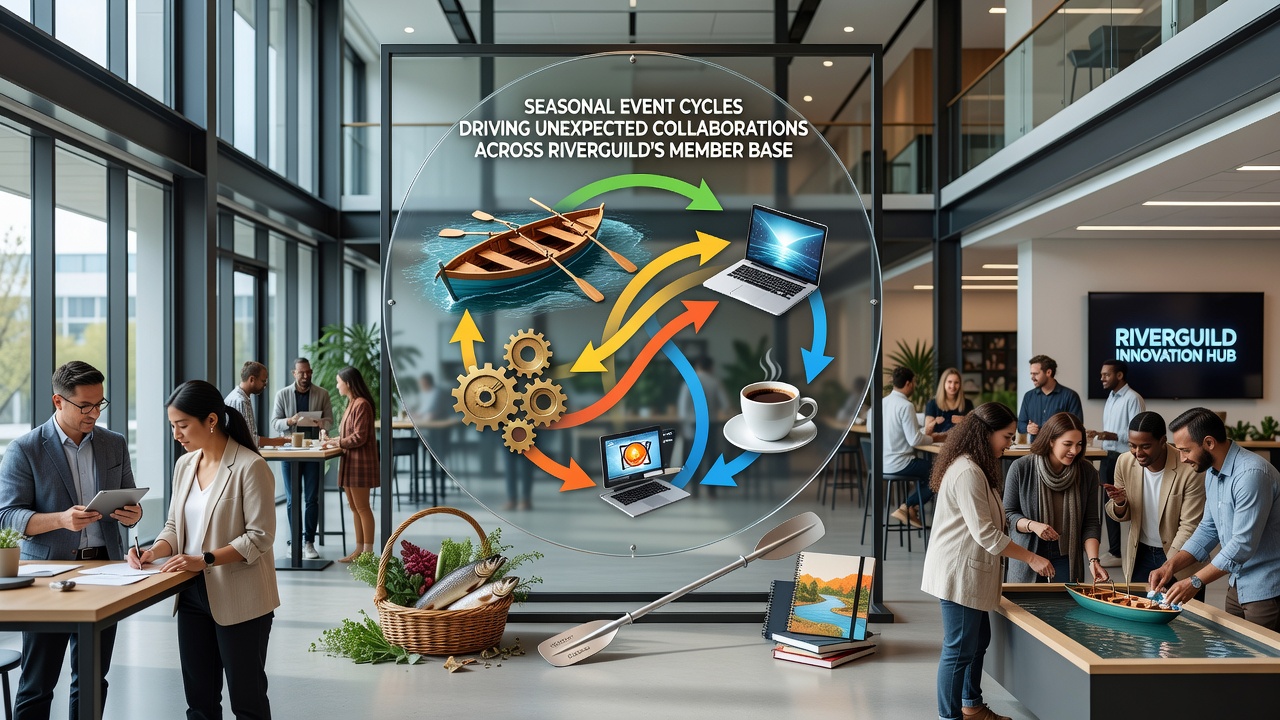
Seasonal event cycles within Riverguild operate as recurring frameworks that align member activities around shared themes and timelines, and these patterns consistently generate collaborations that extend beyond initial participant groups. Data from network activity logs shows that events tied to quarterly cycles draw in members from disparate skill sets, while those who join during peak periods often form working groups that persist after the events conclude. Research indicates these cycles create structured entry points where expertise redistribution occurs naturally through task-based pairings rather than formal recruitment processes.
Mapping the Event Cycles Across the Network
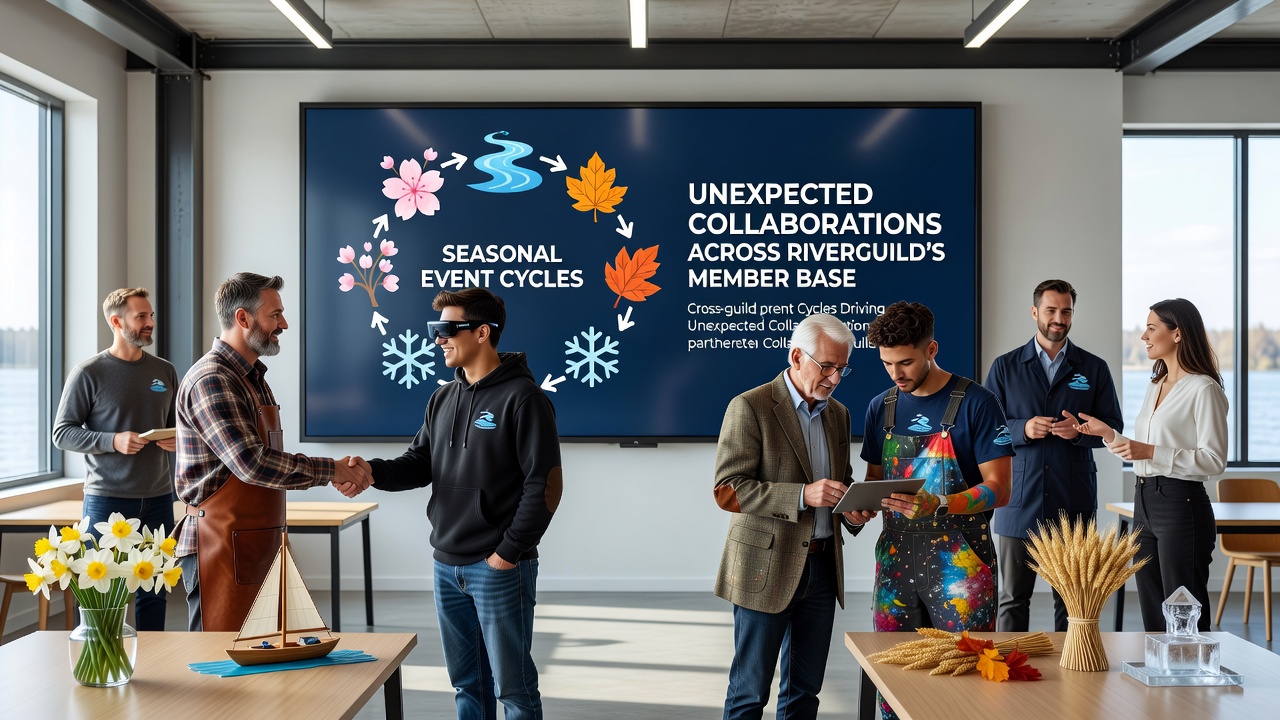
Observers note that Riverguild structures its seasonal events around calendar markers that include solstice-themed challenges in winter months alongside harvest-style resource sharing periods in autumn, and each cycle incorporates specific objectives such as collective asset mapping or skill exchange forums. Figures from internal tracking systems reveal participation spikes of up to 40 percent during these windows compared to baseline months, while November 2026 has been flagged in planning documents as a period featuring expanded cross-regional matchmaking protocols. Members who engage early in these cycles frequently report connections that lead to joint projects spanning multiple guilds, and the mechanisms rely on algorithmic pairing tools that prioritize complementary profiles over geographic proximity.
Patterns of Collaboration Formation
Those who have examined participation records find that unexpected pairings emerge when event tasks require input from both technical and creative domains, such as when digital asset optimization combines with narrative content development during themed sprints. A study conducted by researchers at the University of Melbourne documented similar dynamics in online professional collectives, where event-driven structures increased cross-functional interactions by measurable margins. And the data shows these collaborations often stabilize into ongoing resource hubs once the seasonal window closes, with members continuing exchanges through dedicated channels established during the cycle.
What's interesting is how certain cycles accelerate skill reallocation, particularly when events incorporate elements like timed challenges that force rapid team assembly. Participants who enter with narrow focus areas end up contributing to broader initiatives because the event format demands integrated outputs, and this process occurs without centralized direction in many documented cases.
Evidence from Recent Cycles and Broader Context
Activity metrics collected through 2025 and into early 2026 demonstrate that seasonal peaks correlate with higher rates of new guild formations, although the specific drivers remain tied to event mechanics rather than external platform changes. According to a report issued by the Australian Competition and Consumer Commission on digital platform interactions, structured community events in professional networks can produce sustained collaboration patterns when they emphasize shared deliverables over individual achievements. The Riverguild model aligns with these observations because its cycles include built-in review stages where initial pairings undergo evaluation and refinement, which in turn solidifies partnerships that might otherwise dissolve.
Yet the process also surfaces variations by region, with members from European clusters showing stronger tendencies toward multi-cycle involvement compared to those in North American segments. This geographic difference appears in aggregated logs but does not alter the overall outcome of unexpected team formations during active event periods. November 2026 events are positioned to test enhanced versions of these protocols, incorporating feedback from prior cycles to refine matching criteria further.
Longer-Term Effects on Member Networks
Evidence suggests that the collaborations initiated through seasonal cycles contribute to network resilience by distributing expertise more evenly across the member base, and this redistribution happens incrementally as participants carry forward methods learned during events. Case examples include one instance where a resource mapping challenge in the spring cycle led to a permanent subgroup focused on sustainability metrics, while another autumn event produced cross-border asset verification teams that continued operations independently. These outcomes emerge consistently because the event structures prioritize measurable contributions within fixed timeframes, which encourages efficient knowledge transfer among diverse participants.
Additional patterns appear when cycles overlap with external industry shifts, such as updates to digital asset standards, because members leverage the event momentum to address those changes collectively rather than in isolation. The result is a series of ad hoc working arrangements that evolve into more formal arrangements without requiring top-down intervention.
Conclusion
Seasonal event cycles in Riverguild function as reliable catalysts for member interactions that extend into lasting professional arrangements, and the documented patterns from multiple cycles confirm their role in expanding collaboration reach across the network. Metrics tied to November 2026 preparations indicate continued emphasis on these mechanisms, with adjustments based on prior participation data to optimize pairing efficiency. Broader research from sources such as the University of Melbourne and regulatory analyses from the Australian Competition and Consumer Commission supports the observation that event-based frameworks in online collectives produce measurable increases in cross-functional activity, and Riverguild's implementation demonstrates how these dynamics scale within a specialized member environment.